
A Day in the Life of… A Leadership Retreat
A leadership retreat creates space to step back, hear different perspectives, and turn complex challenges into clear next steps. Connectionmark helps teams clarify what matters, simplify the path forward, and take ownership of what happens next. Clarity before commitment.
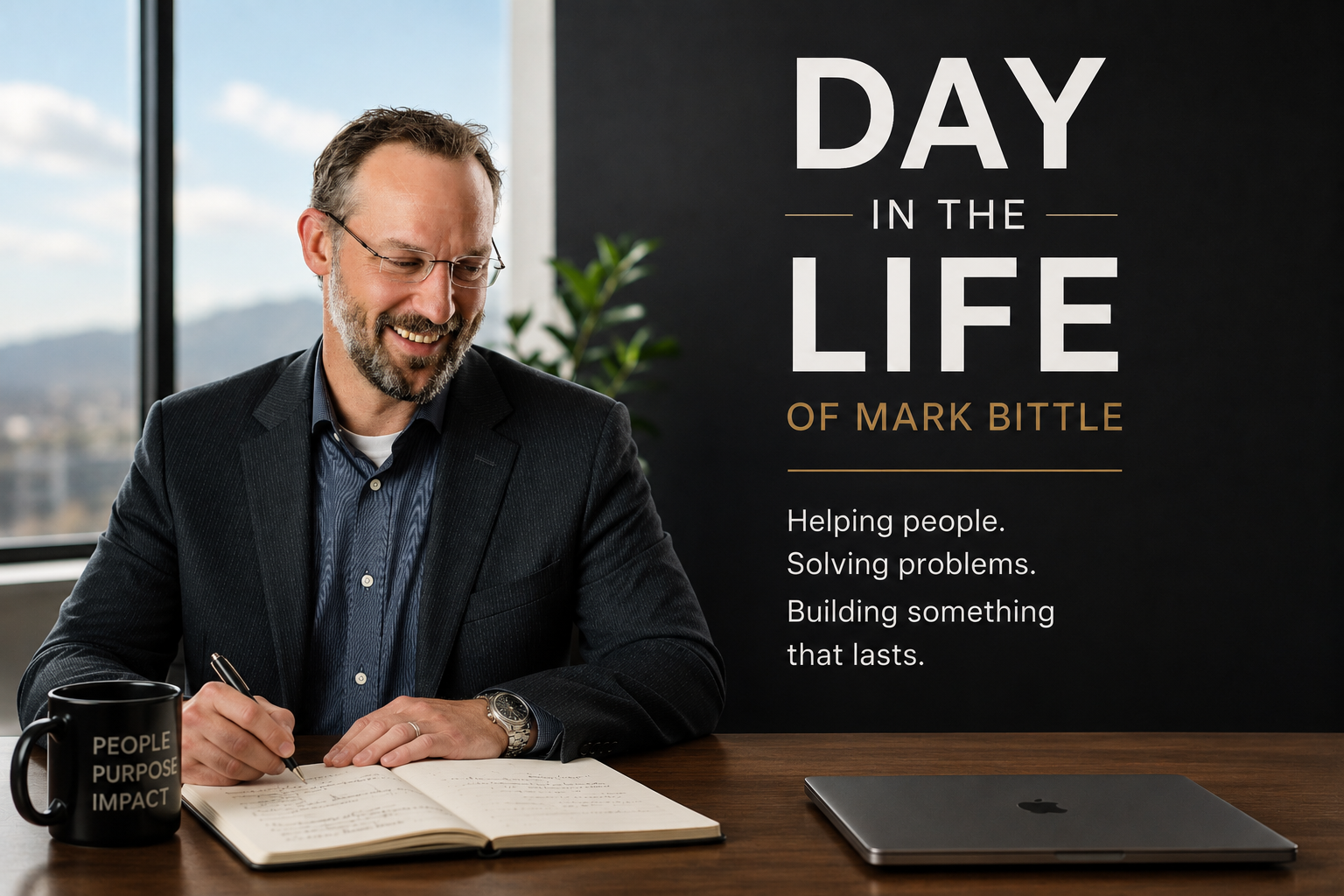
When the Work Starts Changing
Some days aren't measured by how many meetings you had or how many things you checked off a list.
They're measured by what changed because you showed up.
Over the last few days, I helped business owners think through difficult decisions, developed ideas into intellectual property, coached people preparing to step into bigger roles, connected people who could help one another, and continued building the team and community around Connectionmark.
But the biggest realization was about my own business.
I don't want to build an organization where everyone needs Mark.
I want to build a place where someone can walk through the door, tell us what they're trying to accomplish, and find the people, perspective, resources, and time they need to figure out what comes next.
Because if every decision requires the owner, the owner isn't just leading the business.
They're becoming its constraint.
This is a Day in the Life of Mark Bittle.
Helping people. Solving problems. And building something designed to last.
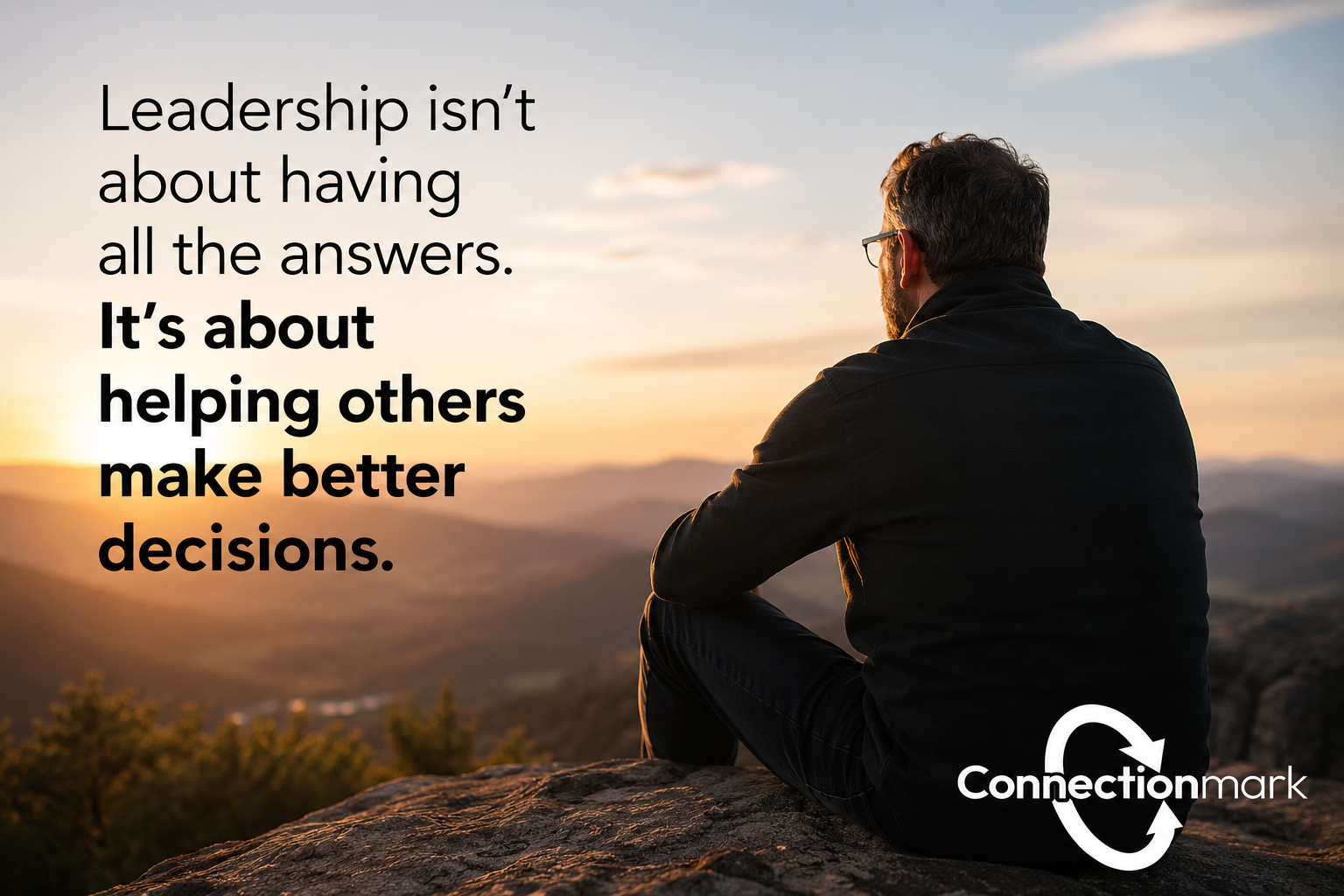
Leadership Is Decision Architecture
Leadership isn't just about making good decisions yourself. It's about creating an environment where others learn to make better decisions, too. Through clarity, trust, communication, and appropriate autonomy, leaders shape how people respond to uncertainty, take ownership, and act. Applied Decision Intelligence™ asks leaders to consider not only, “What decision should I make?” but also, “What kind of decision-makers am I developing?”
The Story of the Connectionmark Dam
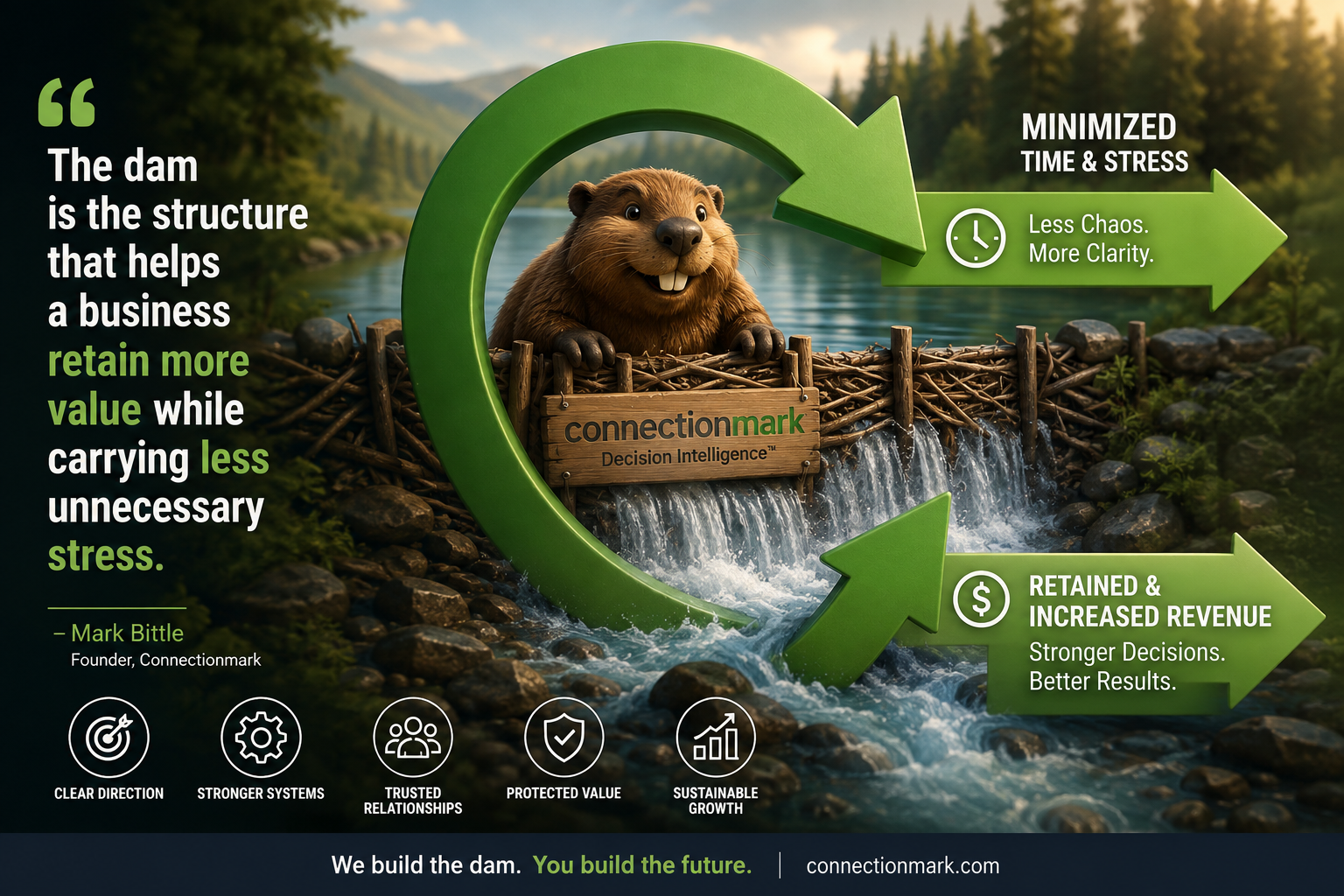
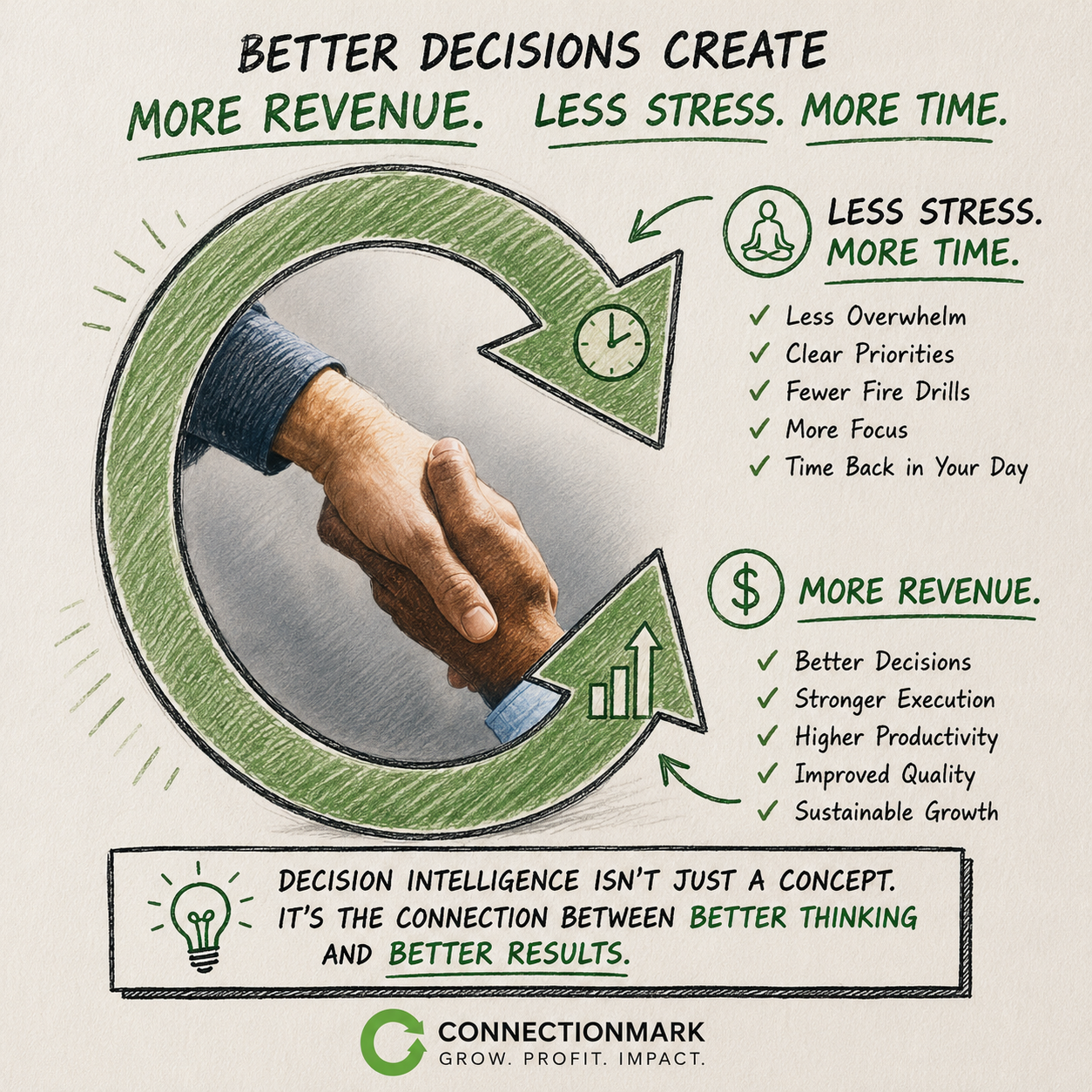
The beaver did not build the dam to stop the water. It built the dam to control the flow.
Without the right structure, a business can lose more than revenue. Time is wasted, stress increases, opportunities are missed, and talented people spend their days reacting to problems that should have been prevented.
At the point where the two ends of the Connectionmark “C” come together, the beaver builds the dam. That dam represents the decisions, systems, relationships, and operational discipline that keep value from leaking out of a business.
The lower arrow shows what happens financially: revenue is retained, protected, and increased. The upper arrow shows the human result: unnecessary time, confusion, and stress are minimized.
The dam does not prevent progress. It creates the structure that makes sustainable progress possible.
Because when a business has clear direction, stronger systems, and better decisions, it does not have to work harder just to survive.
It can retain more value, carry less unnecessary stress, and build with greater confidence.
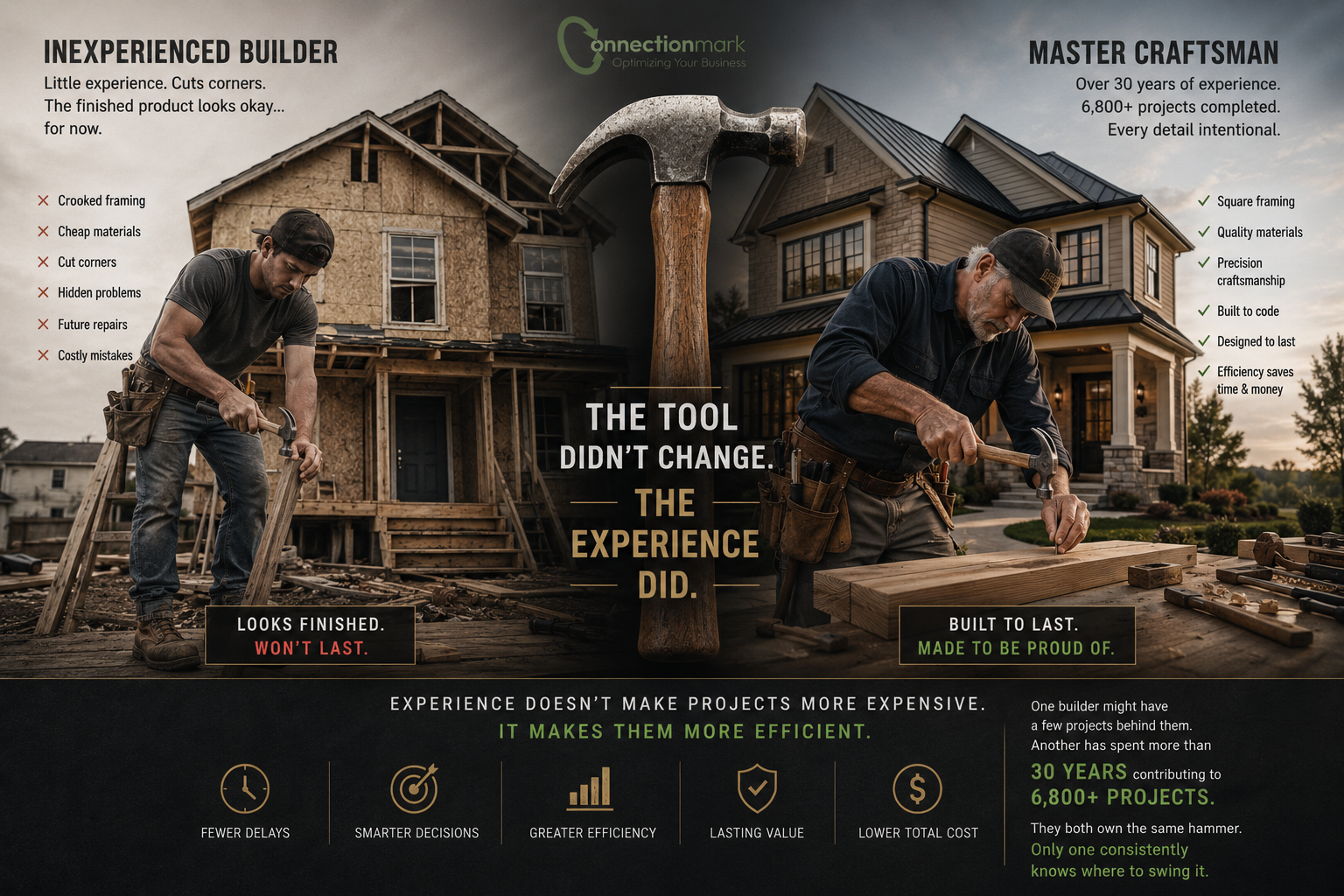
The Hammer Isn't the Difference. The Person Holding It Is.
Every business owner has access to the same tools. The difference isn't the hammer, it's the experience of the person holding it.
At Connectionmark, we believe your hard-earned money should stay in your business whenever possible. Instead of pushing expensive solutions or creating dependency, we help you make better decisions, avoid costly mistakes, and connect with trusted professionals only when the time is right.
We don't sit across the table telling you what to do. We sit beside you, helping you build the confidence, clarity, and capability to make decisions that strengthen your business for years to come.
Because our goal isn't to become your biggest expense.
It's to become one of your best investments.
Better Decisions. Stronger Businesses. Stronger Communities.
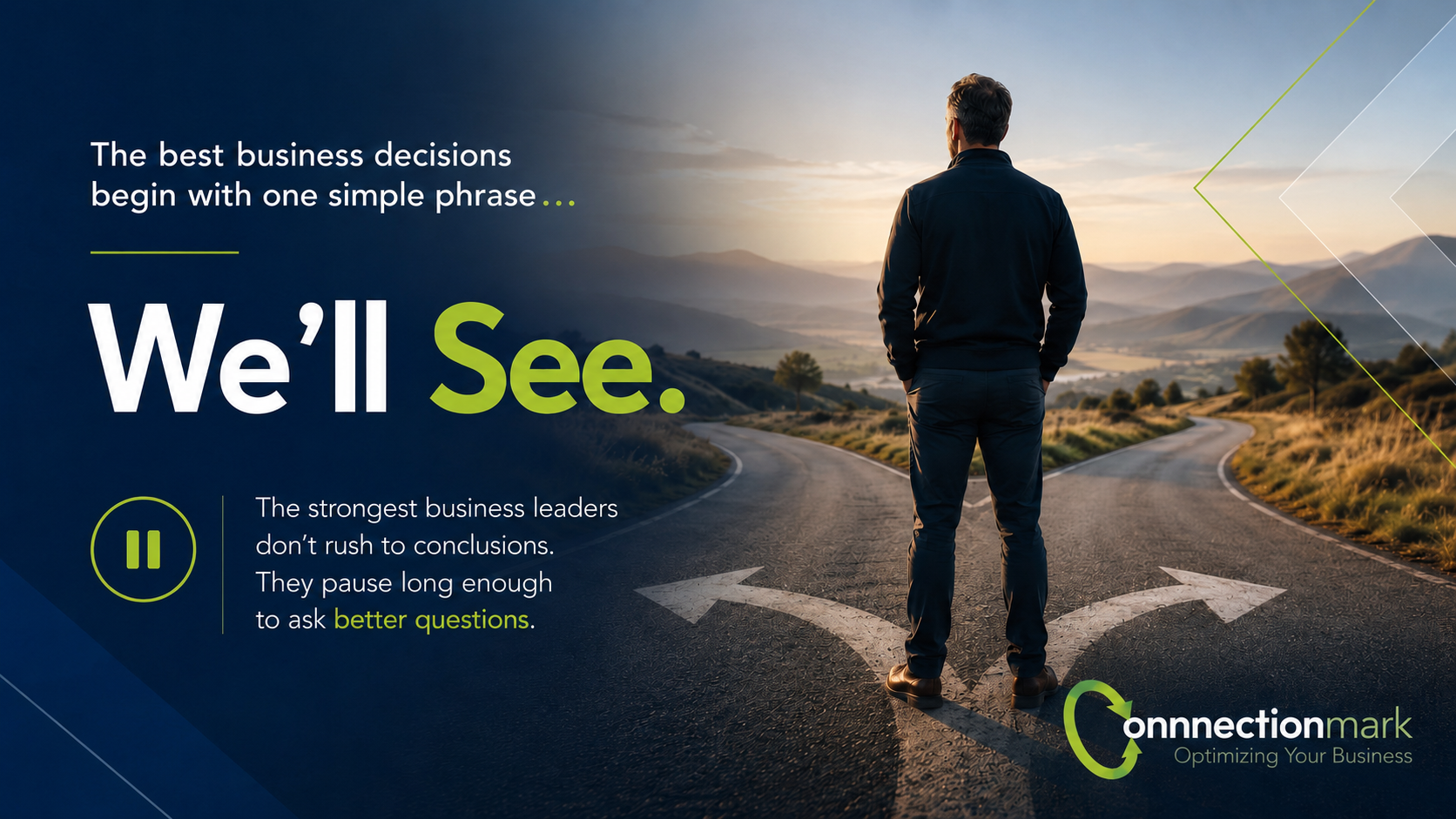
“We’ll See.”
We’ll See.
Those two words may be the most valuable advice a business owner can hear.
When everyone else is celebrating the latest opportunity, chasing the newest marketing trend, or promising guaranteed results, the best leaders pause. They ask better questions. They gather better information. They make better decisions.
Success isn’t created by reacting quickly, it’s built by thinking clearly.
In this article, I share why “We’ll see.” has become one of the most important phrases in my work with business owners, and how a simple pause between excitement and action can protect your business, strengthen your strategy, and lead to sustainable growth.
Better decisions don’t happen by accident. They happen by design.
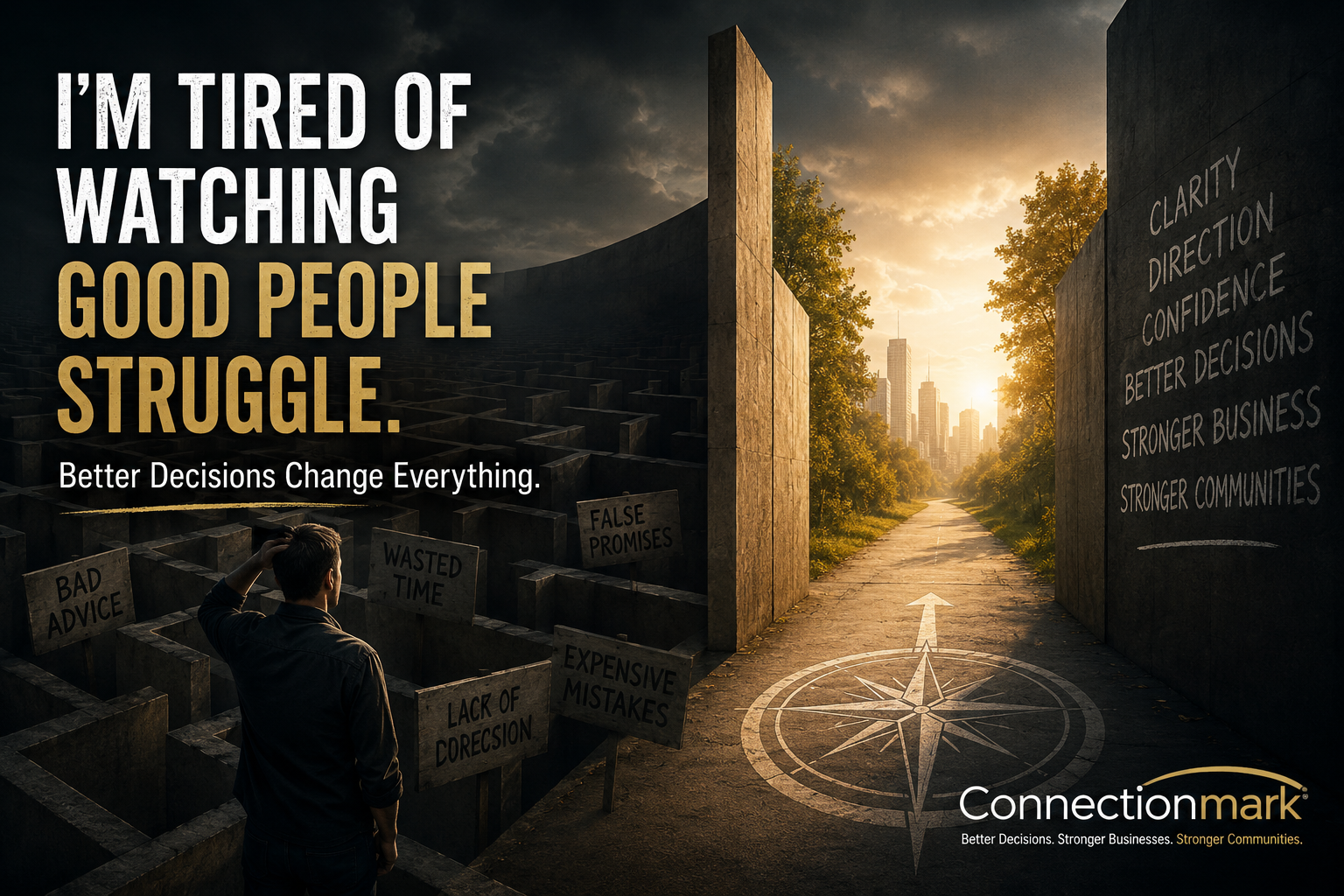
I'm Tired of Watching Good People Struggle
How many good people have to struggle before someone starts asking better questions?
After more than 30 years of working alongside business owners, I've seen talented, hardworking people lose time, money, and confidence, not because they lacked ambition, but because they were forced to make important decisions without the clarity they deserved.
That is why I founded Connectionmark™.
This isn't a story about consulting. It's a story about people. It's about why we invest in complimentary education, why we believe better decisions matter more than quick answers, and why our mission has never been to create dependent clients, it has always been to create confident decision makers.
If you've ever felt overwhelmed by conflicting advice, frustrated by broken promises, or simply wanted someone to help you think through your next decision, this story is for you.
Because stronger businesses don't begin with better answers. They begin with better decisions.
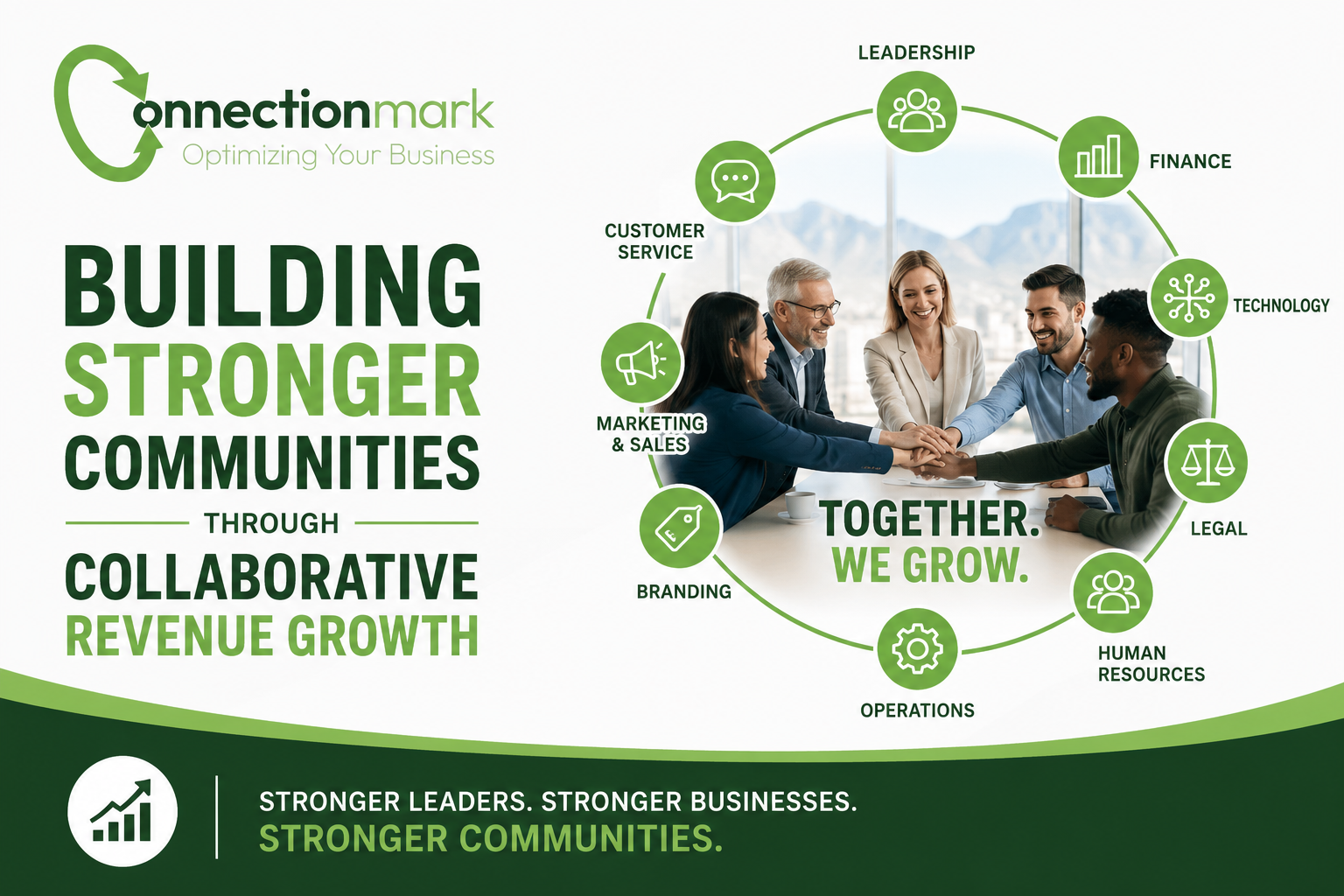
Building Stronger Communities Through Collaborative Revenue Growth
Small businesses grow stronger when owners stop operating in isolation and start solving challenges together. In this article, Mark Bittle introduces the Connectionmark Cooperative Growth Alliance™—a collaborative business ecosystem designed to help local leaders overcome revenue obstacles, access expertise across the Nine Pillars of Revenue, and create measurable growth through shared knowledge, trusted relationships, and a commitment to buying local first.
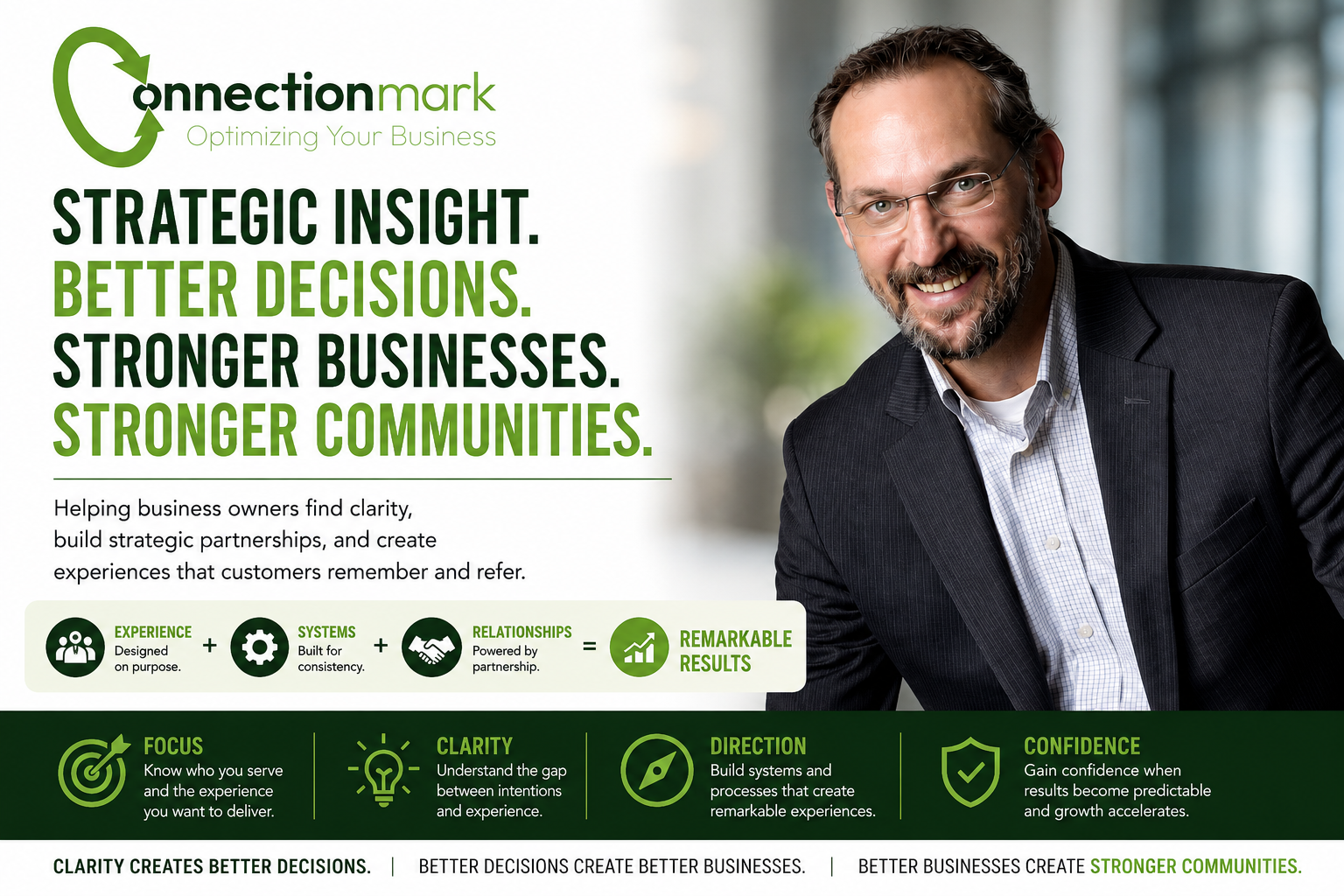
Secret Service and the Power of Strategic Partnerships
Most business owners believe growth comes from working harder.
For years, I did too.
Then life taught me a different lesson.
After starting multiple businesses, experiencing success, losing everything during the financial crisis, and rebuilding from the ground up, I discovered something that John DiJulius reinforces beautifully in Secret Service:
No extraordinary customer experience is created alone.
The businesses that consistently grow, retain customers, earn referrals, and create lasting impact are not necessarily the smartest businesses.
They are the most aligned.
Behind every exceptional customer experience is a network of people, systems, and strategic partners working together toward a common goal.
That’s why one of the biggest lessons I took away from Secret Service wasn’t about customer service at all.
It was about relationships.
Because no business owner can be an expert in finance, operations, technology, marketing, sales, leadership, human resources, legal issues, and customer experience simultaneously.
Yet many try.
The result is predictable:
Decisions get delayed.
Problems compound.
Growth stalls.
Stress increases.
And the customer experience suffers.
The strongest businesses I’ve encountered aren’t built by people who know everything.
They’re built by leaders who know who to trust.
They surround themselves with strategic partners who challenge assumptions, identify blind spots, improve decision-making, and help them see what they cannot see on their own.
That’s not weakness.
That’s leadership.
Because at the end of the day, success isn’t built through transactions.
It’s built through relationships.
And world-class customer experiences are never created alone.
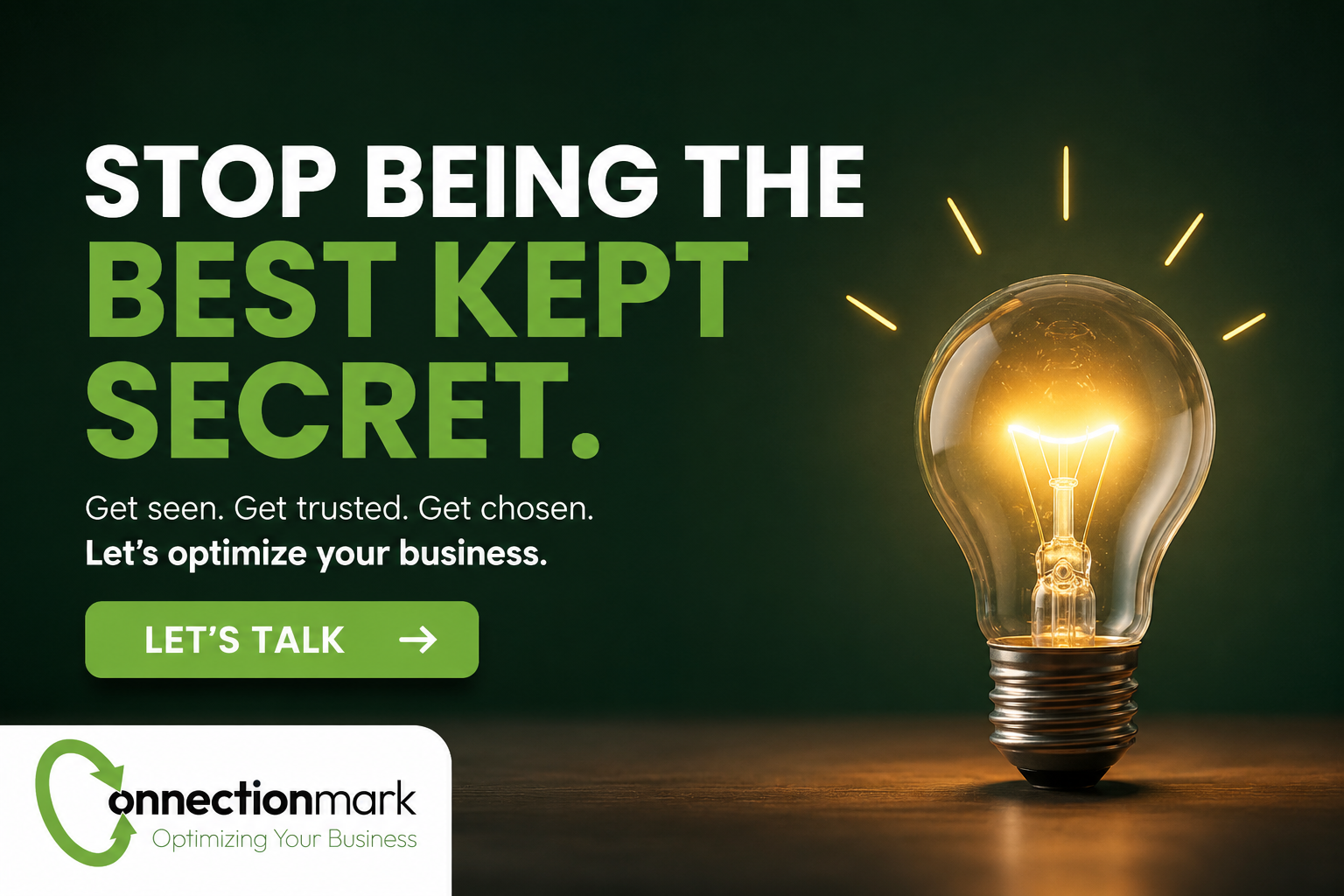
Stop Being the Best Kept Secret
Many business owners are not struggling because they lack talent, intelligence, or work ethic. They are struggling because the market does not clearly understand who they help, what problems they solve, or why they matter. In this recent Connectionmark presentation, facilitator Mark Bittle challenges business owners to stop hiding behind complexity, generic messaging, and “best kept secret” thinking. The workshop explores why clarity has become one of the most valuable competitive advantages in today’s AI-driven marketplace, and why the businesses that consistently educate, simplify, and communicate with relevance will become the ones people trust, remember, and choose.
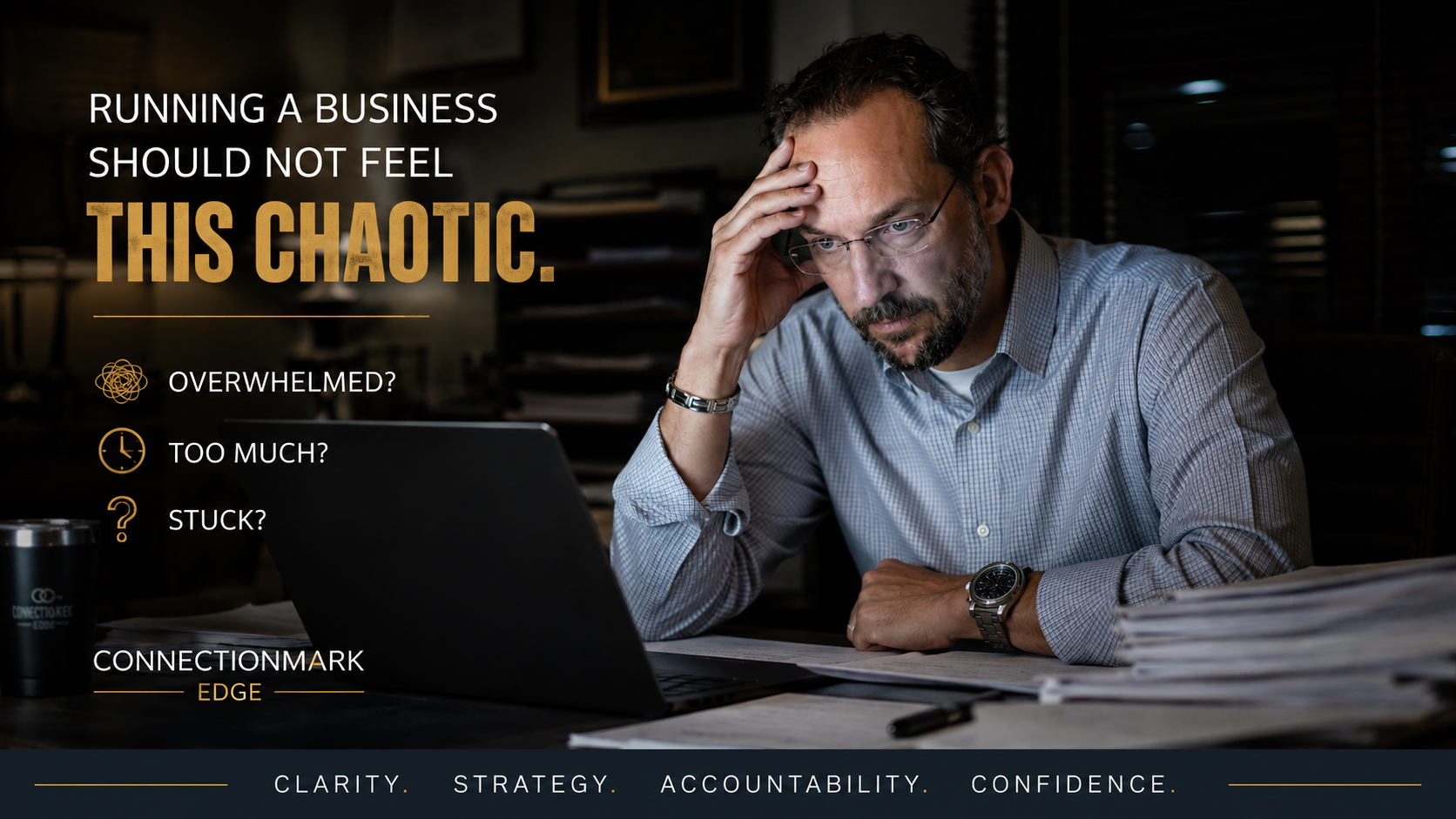
Who Connectionmark Helps — And Why So Many Business Owners Feel Stuck Before They Reach Out
Most business owners are not struggling because they lack effort. They are struggling because they are carrying too much complexity without enough clarity, structure, or strategic thinking space to lead effectively. Communication begins breaking down. Accountability becomes inconsistent. Decisions become heavier. Growth creates more chaos instead of more confidence.
Connectionmark helps business owners, founders, executives, and leadership teams move from overwhelm and operational reaction into clarity, alignment, accountability, and strategic leadership development. Because most business problems are not effort problems, they are decision problems.
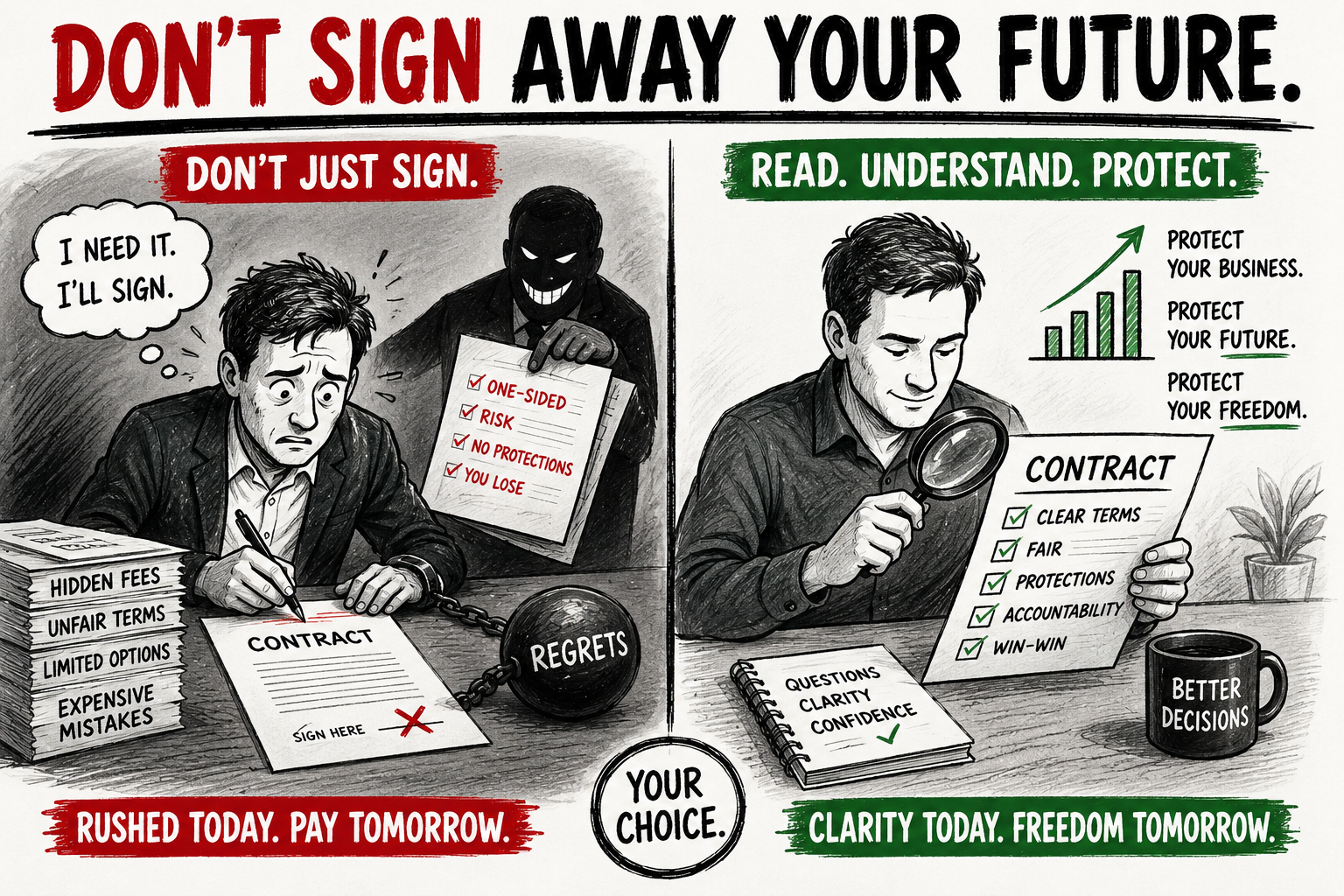
Don’t Sign Away Your Future
One of the most concerning patterns I have seen working with business owners is how many people sign agreements they never fully understood. Not because they are unintelligent, but because they were busy, optimistic, pressured, or afraid of losing an opportunity. Unfortunately, some contracts are designed to create clarity, while others are designed to create leverage. And if you do not slow down long enough to recognize the difference, the consequences can follow your business for years. A rushed signature today can quietly become financial stress, lost control, damaged relationships, or expensive legal exposure tomorrow. Clear agreements are not obstacles to growth. They are protection for your future.
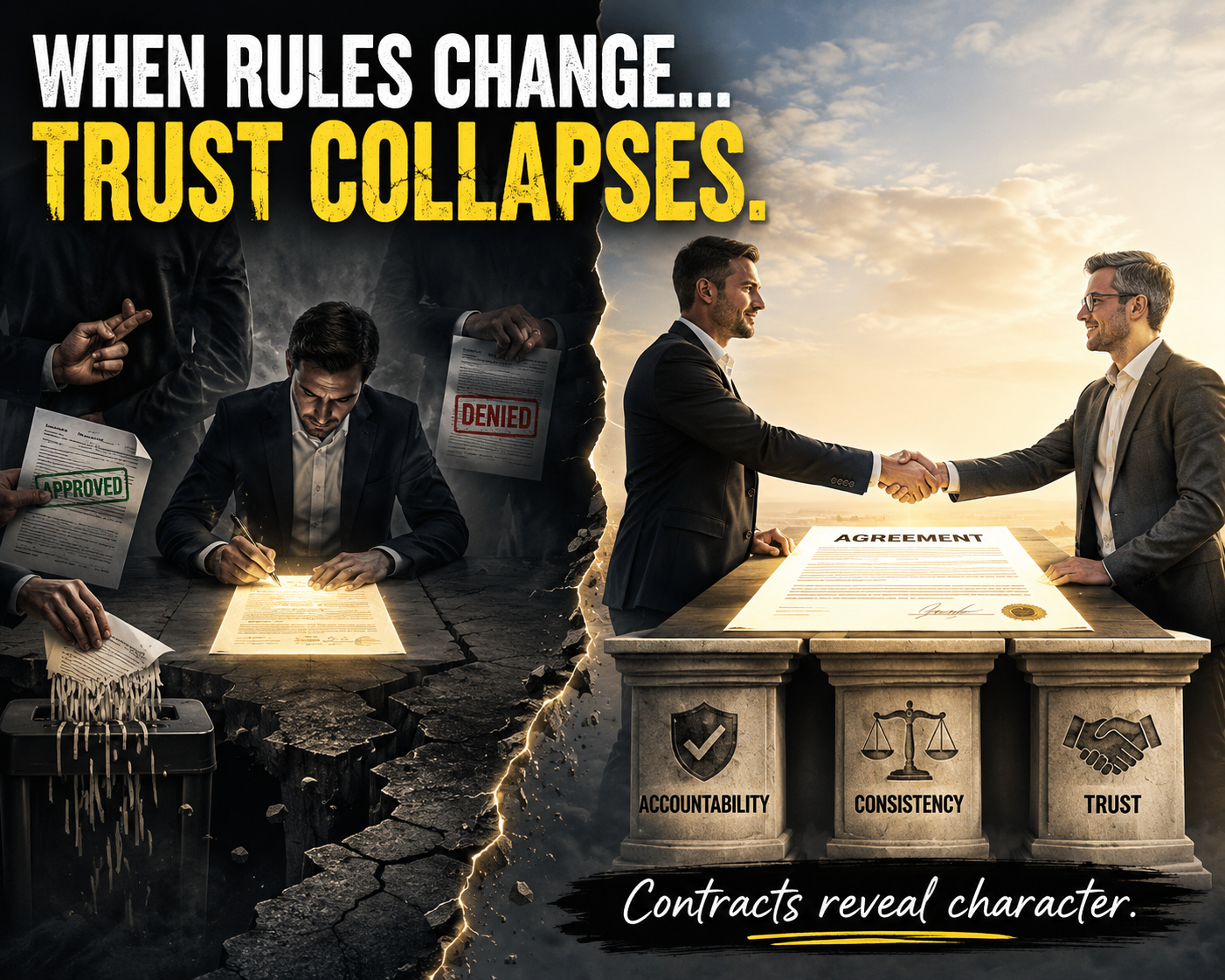
Contracts Are Not Just Paper. They Are Character, Accountability, and Trust.
Contracts are not just paperwork. They are a reflection of accountability, integrity, and trust. When people knowingly ignore agreements, selectively enforce standards, or pressure others to “just sign it,” the issue is no longer administrative, it becomes cultural. Small business owners should pay close attention to this because contracts do more than define legal obligations; they reveal alignment, expectations, and character. Clear agreements protect relationships, consistent standards build trust, and accountability strengthens organizations. The strongest businesses are not built merely on revenue. They are built on trust, and trust is built when words, standards, agreements, and behavior remain aligned, especially when it becomes inconvenient.
The “C” became a symbol of movement.
Most logos are designed to be seen.
Ours was designed to mean something.
The Connectionmark logo represents more than branding, it reflects a philosophy rooted in clarity, connection, momentum, and better decision-making. From the circular movement of the “C” to the open pathway and directional arrow, every element symbolizes the belief that sustainable business growth comes from intentional thinking, not constant chaos.
This is the story behind the mark, and why better decisions ultimately create more revenue, less stress, and more time.
Imagine This…
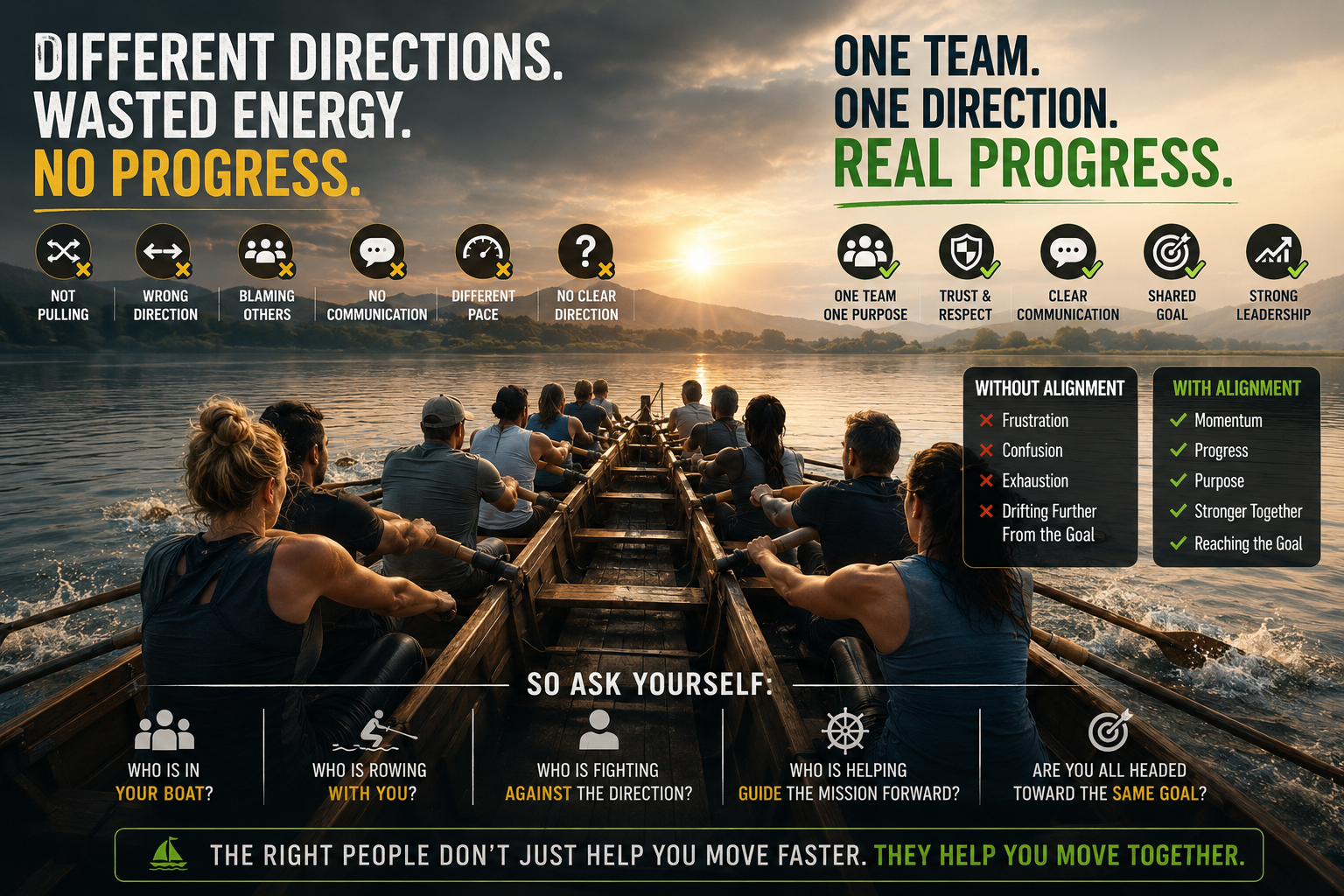
Most teams do not fail because they lack talent.
They fail because they lack alignment.
Imagine nine people in a boat. Eight oars. One rudder. If everyone rows in different directions—or some refuse to row at all—the boat drifts, energy is wasted, and frustration grows. Progress becomes almost impossible, even with capable people on board.
Now imagine the opposite. A team rowing in rhythm, trusting the direction, understanding their role, and moving together toward a shared goal. The water may still be rough, but momentum replaces resistance.
The question is not simply whether you have good people around you.
The real question is:
Who do you have in your boat?
When Accountability Feels Uncomfortable, That Is Usually Where the Work Begins
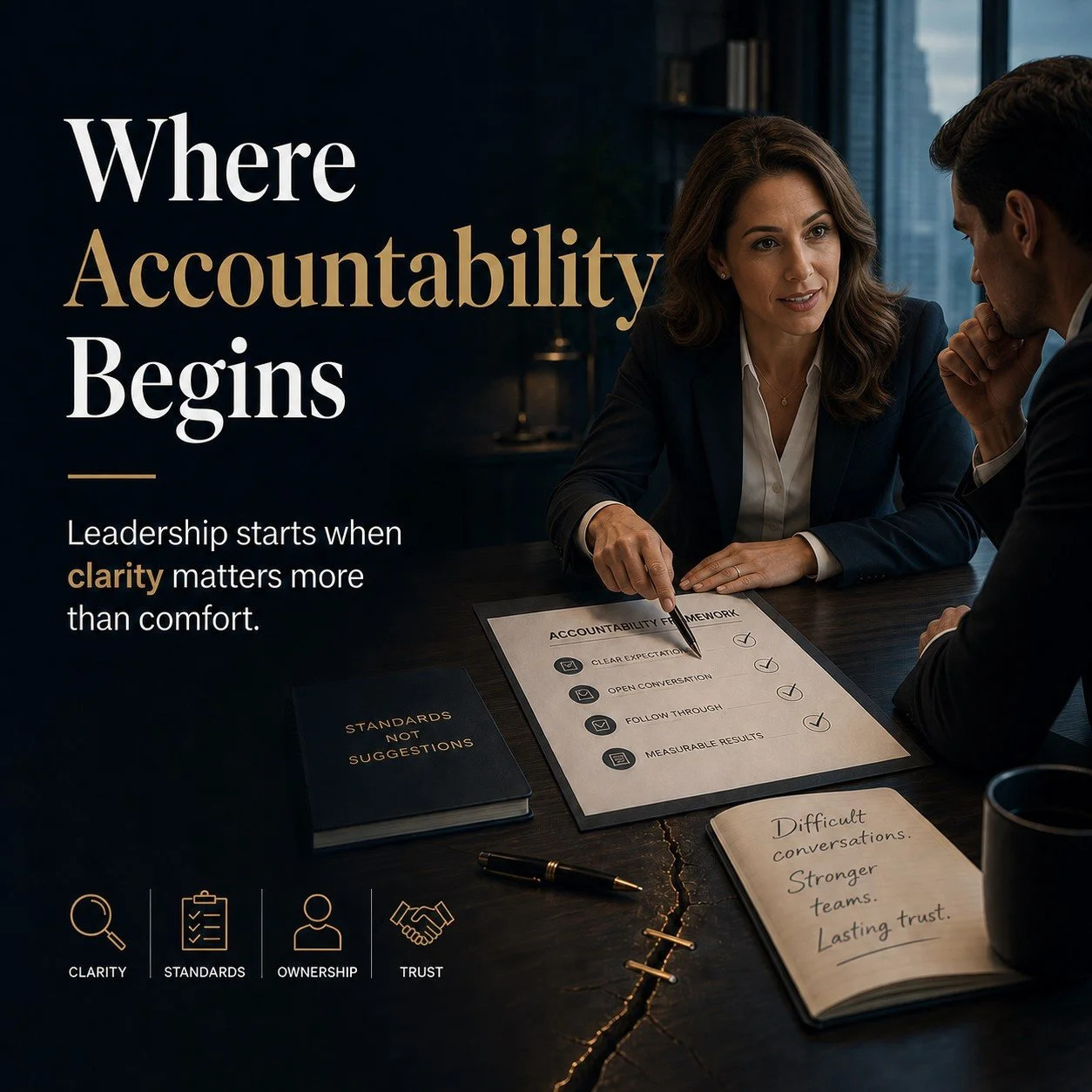
Accountability usually begins where comfort ends. It starts in the moments when leaders choose clarity over avoidance, standards over assumptions, and honest conversations over silent frustration. Strong teams are not built by ignoring hard issues, they are built when expectations are clear, follow-through is required, and trust is protected through consistent leadership.
When the Rules Stop Mattering
Excerpt:
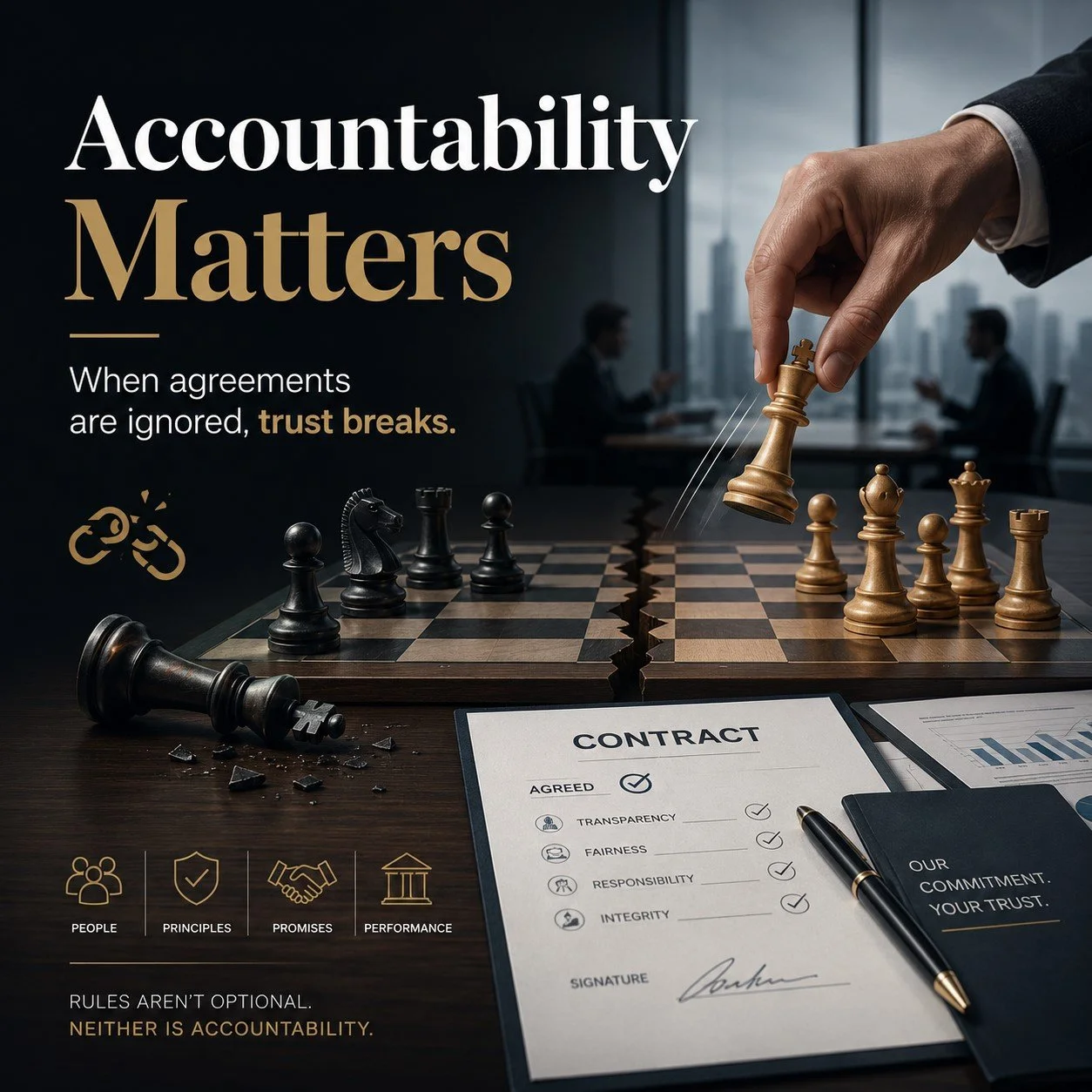
Accountability is not about punishment. It is about clarity, trust, and follow-through. In business, contracts, promises, and partnerships only work when people understand what they agreed to and are willing to honor it. When accountability disappears, trust breaks, and the cost is usually higher than anyone expected.
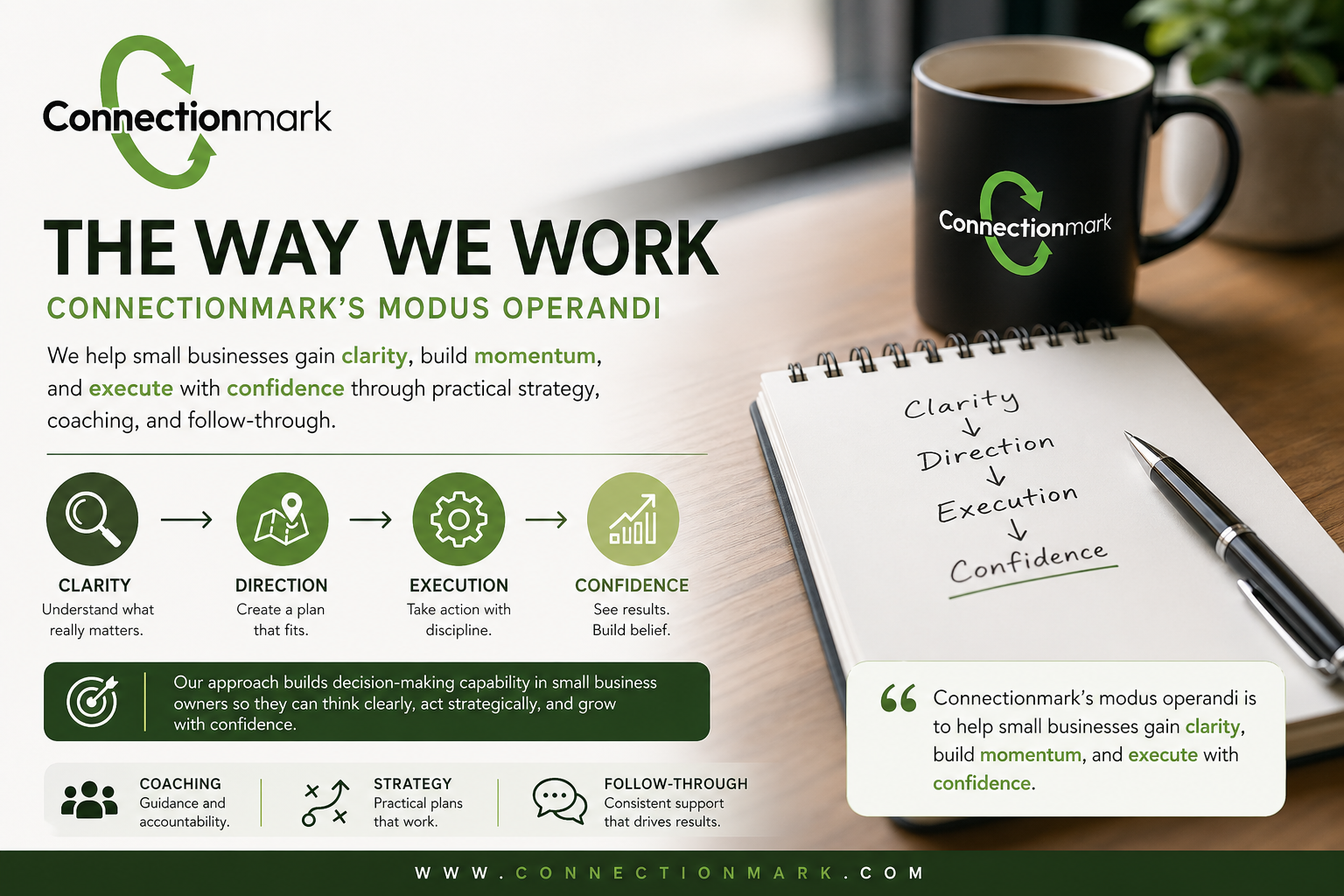
The Way We Work: Connectionmark’s Modus Operandi
Most business owners don’t struggle because they lack effort, they struggle because they lack a structured way to think, decide, and act. Connectionmark’s modus operandi focuses on building clarity first, then creating direction, and finally driving execution so confidence becomes the natural result, not the starting point.
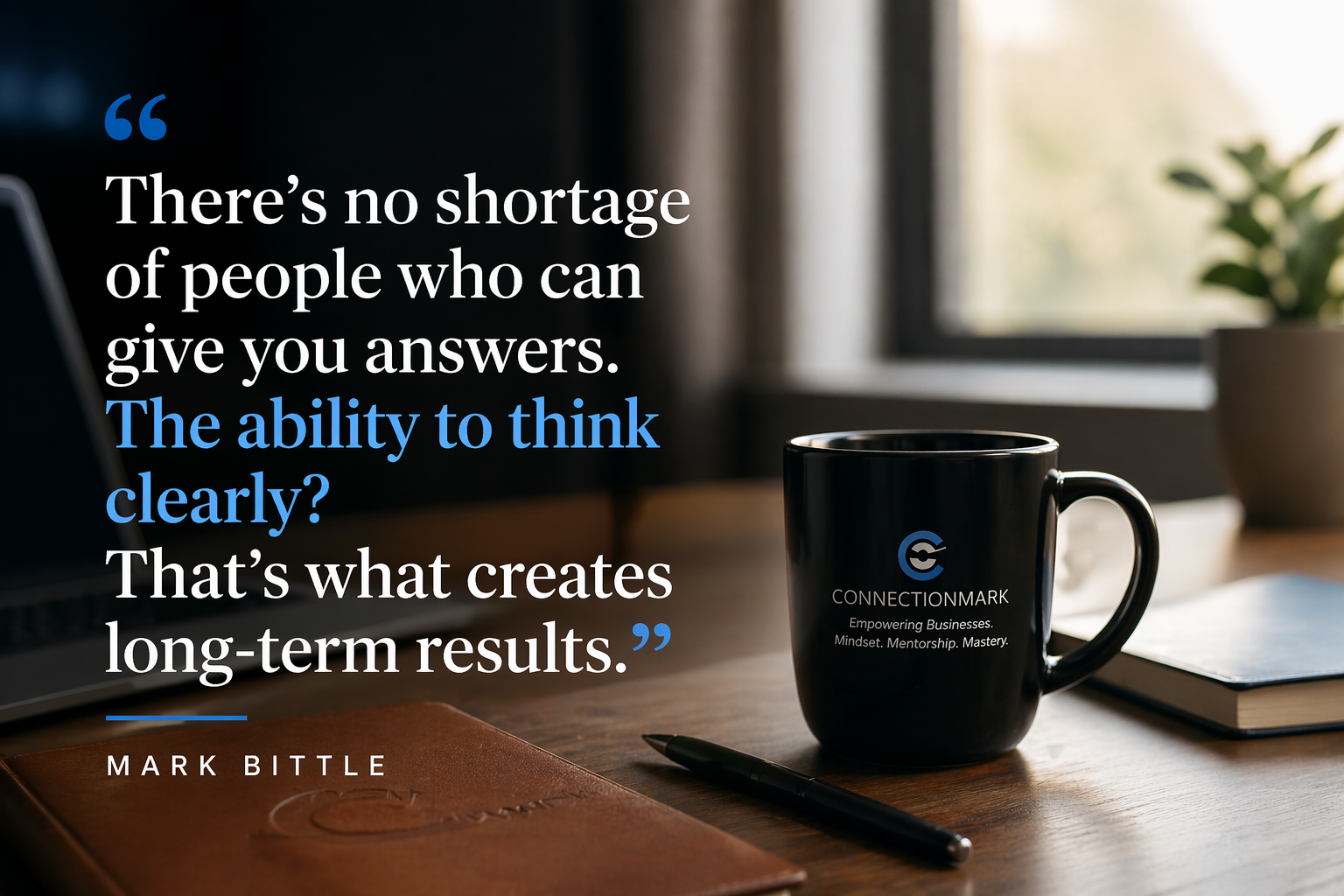
The Difference Isn’t Advice. It’s Architecture.
Most business owners don’t have an information problem—they have a decision problem. In a world full of advice, the real advantage isn’t more answers, it’s the ability to think clearly and act with confidence. Mark Bittle’s approach goes beyond traditional consulting by building decision-making capability, helping clients move from dependence on opinions to ownership of their direction.